



Movie hackers type at impossible speed while a 3D skull flashes “ACCESS GRANTED.” Real intrusion work looks different: a blinking cursor, a wall of scan output, and a lot of reading. Closing that gap is why the best cyber security games to learn hacking matter. They won’t replace a lab, but they build the mental models (reconnaissance, privilege, persistence, detection) that make later technical study stick.
Static theory tells you what a port scan is. A game makes you run one, misread the result, and get traced. That feedback loop is why gamified learning reinforces concepts faster than slides alone. Here are seven games worth your time, from raw terminals to defensive card decks.
1. Hacknet
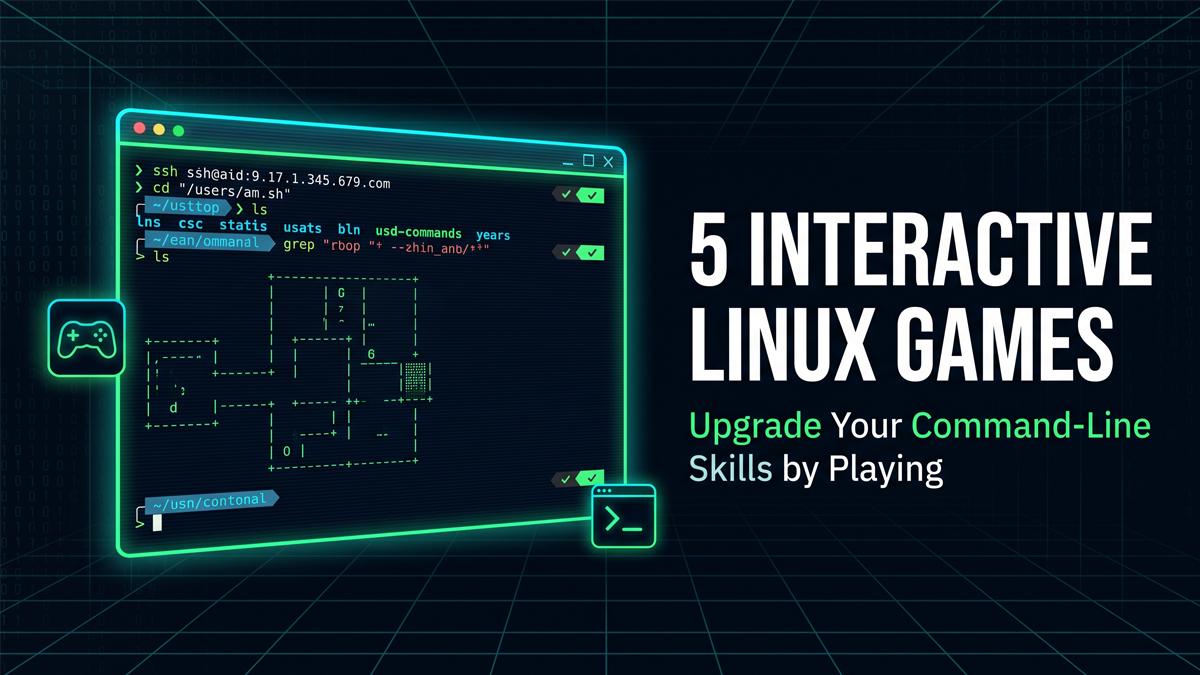
Hacknet puts you inside a fake operating system driven by a real-feeling UNIX-style terminal.
- What it teaches: Navigating file systems with
ls,cd, andcat, scanning for open ports, and chaining exploits against a target’s services. - Why it stands out: Every mission forces you to enumerate before you act. The pacing is compressed (real intrusions take days, not minutes), but the discipline of discover, probe, then exploit is authentic.
2. Nite Team 4
You join a covert cyber unit running operations against hostile actors.
- What it teaches: OSINT collection, SIGINT analysis, network mapping, and how analysts connect scattered fragments into attribution.
- Why it stands out: It models the intelligence workflow behind state-level operations: gather, correlate, verify, act. Tradecraft here is stylized, but the analytic mindset is what real threat-intel teams use.
3. Grey Hack
A persistent multiplayer sandbox with procedurally generated networks.
- What it teaches: Writing scripts in its in-game language, building your own tools, and understanding how services, users, and permissions interact.
- Why it stands out: Other players can attack you, so defense matters as much as offense. Automating your own toolkit mirrors how professionals work.
4. Backdoors & Breaches
Not a video game in the strict sense: a tabletop card deck from Black Hills Information Security for incident response practice.
- What it teaches: Attack lifecycle stages (initial compromise, pivoting, command and control, persistence, exfiltration) and how detection and response procedures map onto each.
- Why it stands out: An “incident captain” draws attack cards and the team must decide what evidence to pull and which controls would have caught it. It’s the best blue-team training on this list, and it works for a whole SOC around a table.
5. Cyber Manhunt
An investigation game built around digital footprints.
- What it teaches: Social engineering awareness, OSINT verification, and how much a public profile leaks.
- Why it stands out: It makes you question sources and weigh ethical limits: just because information is findable doesn’t mean using it is acceptable. That judgment separates professionals from reckless amateurs.
6. Bitburner
A cyberpunk incremental game where progress depends on real code.
- What it teaches: Actual JavaScript, using the game’s
nsAPI to scan servers, hack, grow, and weaken targets with your own scripts. - Why it stands out: You automate everything. Loops, recursion, and resource management stop being abstract. It’s also free and open source, which makes it the lowest-friction entry point here.
7. Uplink
The 2001 classic that started the genre.
- What it teaches: Routing through bounce nodes, trace prevention, and weighing risk against reward when accepting contracts.
- Why it stands out: The tension of a counting-down trace is unmatched. The interface is dated, but its core lesson (every action leaves logs) is timeless.
Comparison Matrix
| Game | Focus Area | Key Skill Taught | Learning Curve | Platform / Price* |
|---|---|---|---|---|
| Hacknet | Offensive | Terminal commands, port exploitation | Beginner | PC/Mac/Linux, ~$10 |
| Nite Team 4 | OSINT / Offensive | SIGINT, OSINT, attribution | Intermediate | PC, ~$20 |
| Grey Hack | Offensive / Defensive | Scripting, system administration | Advanced | PC, paid (Early Access) |
| Backdoors & Breaches | Defensive | Incident response, detection mapping | Beginner | Card deck, free/low cost |
| Cyber Manhunt | OSINT | Social engineering, verification | Beginner | PC, paid |
| Bitburner | Offensive (scripting) | JavaScript automation | Intermediate | Browser/PC, free |
| Uplink | Offensive | Trace evasion, risk management | Intermediate | PC/Mac/Linux, ~$10 |
*Prices are approximate and change with sales; check each store page.
Bridging the Gap: Games vs. Real Practice
Be clear about the limits. These games teach intuition, scripting, and methodology. They don’t teach you how real vulnerabilities behave, how real tooling output looks, or how to stay inside legal boundaries. Their exploits are simplified by design.
Pair them with platforms built for hands-on skill:
- TryHackMe for guided, beginner-friendly rooms.
- Hack The Box for realistic machines and harder challenges.
- OverTheWire (Bandit and similar wargames) for command-line fundamentals.
A sensible path: play Hacknet or Bitburner to get comfortable thinking in terminals and code, then move to TryHackMe to apply it on real systems. Always practice only on systems you own or are explicitly authorized to test.
Also learn, Complete Nmap Guide: Network Scanning, Service Enumeration, NSE, Output Analysis, and Security Auditing.
Conclusion
Games won’t make you a penetration tester, but they will make you think like one: enumerate first, automate the boring parts, assume everything is logged, and respect the ethics. Start with one that fits your goal (Bitburner for coding, Backdoors & Breaches for defense, Hacknet for terminal feel), then graduate to real labs.
What’s your favorite terminal simulation, or your current home-lab setup? Share it in the comments.
Discover more from Jahid Shah
Subscribe to get the latest posts sent to your email.