



Security teams rarely lack alerts. They lack people who can tell which alerts matter. A Security Operations Center (SOC) is the team that monitors an organization’s systems, detects suspicious activity, investigates it and coordinates the response. Much of that work happens inside a SIEM (security information and event management) platform, which gathers log data from across an environment so analysts can search, correlate and investigate it. Splunk is one of the best-known SIEM platforms, which is why Splunk skills appear so often in SOC analyst training.
Cisco Networking Academy now offers eight free Splunk-built courses that together form its Cybersecurity Defense Analyst Career Path. Here is what each one covers, a sensible order, and an honest look at what the courses can and cannot do for you.
Cisco Networking Academy, Splunk and the Defense Analyst Path
Cisco Networking Academy (NetAcad) delivers self-paced cybersecurity and networking courses through a free account. Cisco describes this career path as eight courses and about 30 hours of hands-on SOC analyst training, built on the Splunk platform. NetAcad lists the courses as free, but confirm that on each page before you enrol, because offers change.
8 Free Cisco Splunk Courses That Help to Be a SOC Analyst
1. The Cybersecurity Landscape
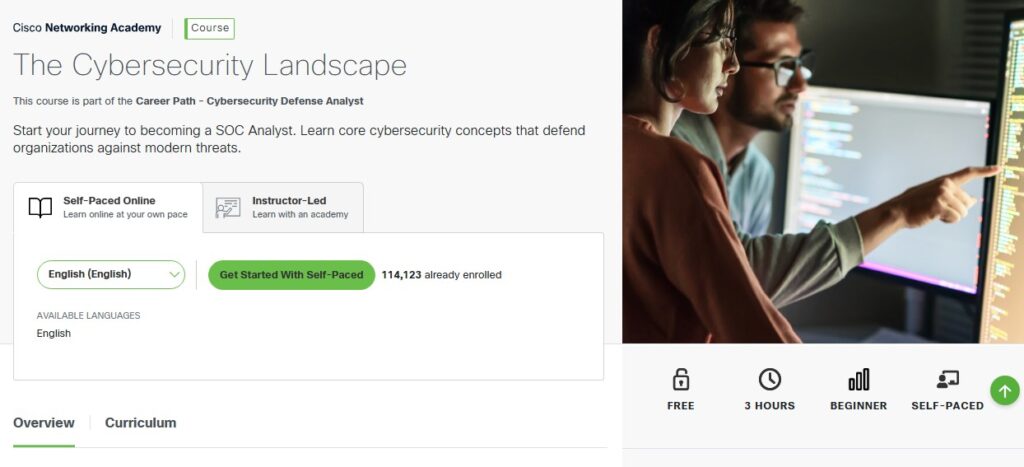
The starting point. It links historic breaches to today’s threats and explains why organizations hire SOC analysts.
- You will learn: core security concepts, how real incidents unfolded and why they mattered.
- Skills: security fundamentals and the vocabulary used on security teams.
- Who should take it: complete beginners and career changers. NetAcad lists it as beginner level.
Enrol: The Cybersecurity Landscape
2. Understanding Threats and Attacks
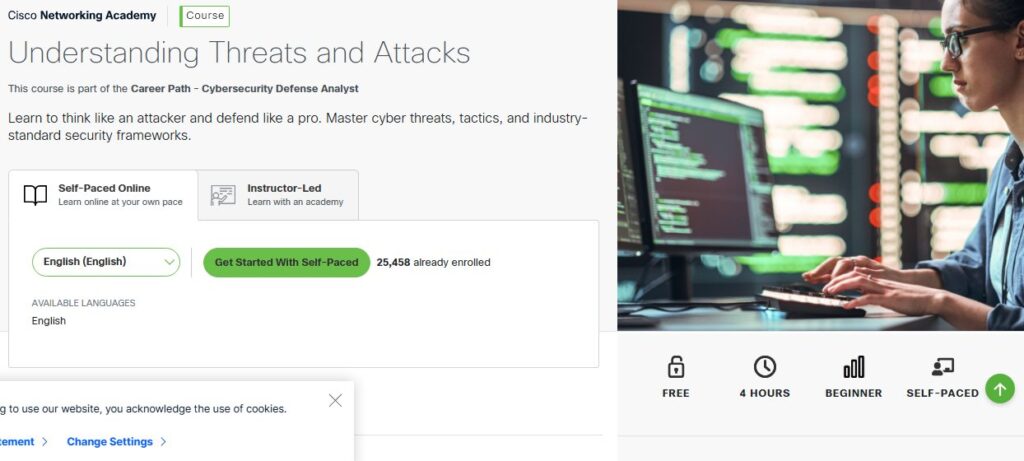
Splunk’s course description covers who attackers are and what drives them.
- You will learn: advanced persistent threats, common attack types and vectors, tactics, techniques and procedures (TTPs), and analytic frameworks, with spotlights on insider threats and supply chain attacks.
- Skills: recognizing attack patterns and describing them in standard terms.
- Who should take it: learners who finished course 1. Basic networking, OSI model and Windows/Linux familiarity helps.
- Enrol: Understanding Threats and Attacks
3. Security Operations and the Defense Analyst
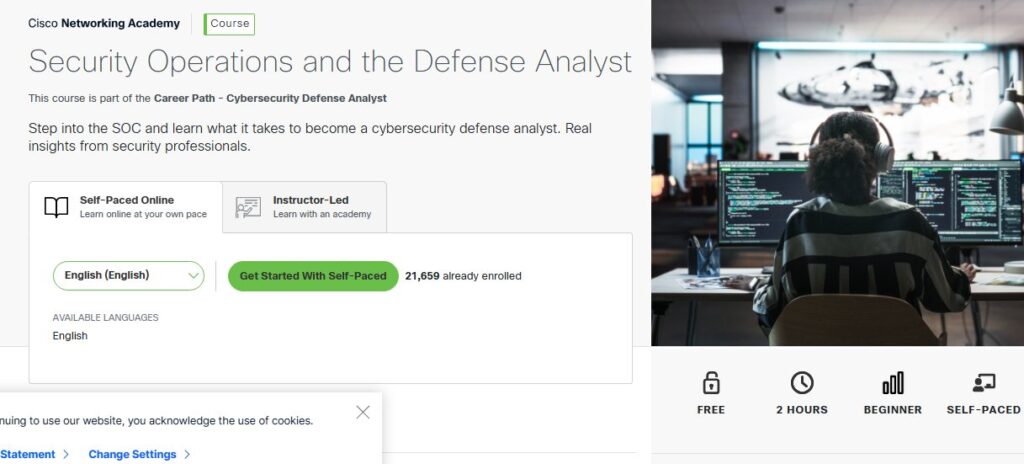
An inside look at SOC work through interviews with Splunk security experts.
- You will learn: the roles in a SOC, including cyber analyst, security engineer and security architect, how a SOC is organized and how it measures success.
- Skills: understanding SOC workflows and where an analyst fits.
- Who should take it: anyone deciding whether SOC work suits them.
- Enrol: Security Operations and the Defense Analyst
4. Introduction to Splunk
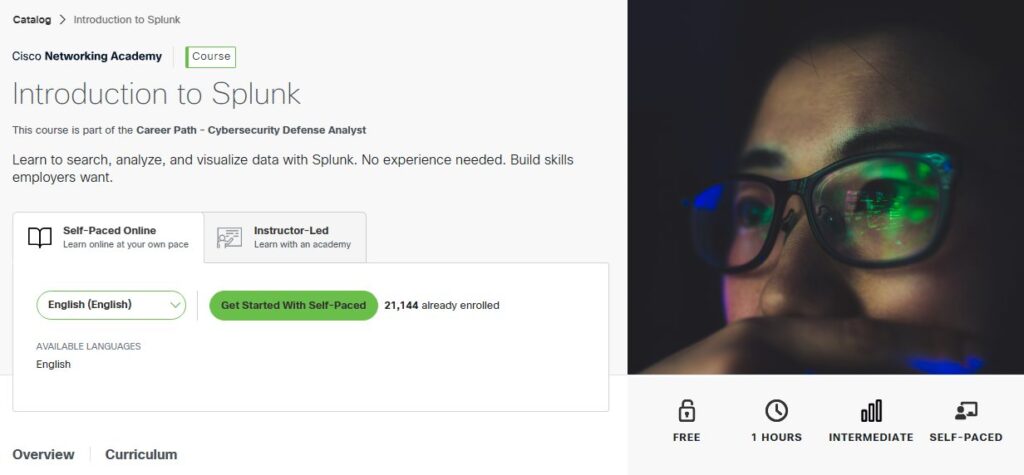
A beginner-focused introduction to the platform itself.
- You will learn: searching with SPL (Search Processing Language), working with fields, transforming results, and building visualizations, reports and dashboards.
- Skills: writing basic Splunk searches and presenting results.
- Who should take it: anyone new to Splunk. Splunk lists no prerequisites for its version.
- Enrol: Introduction to Splunk
5. Data and Tools for Defense Analysts
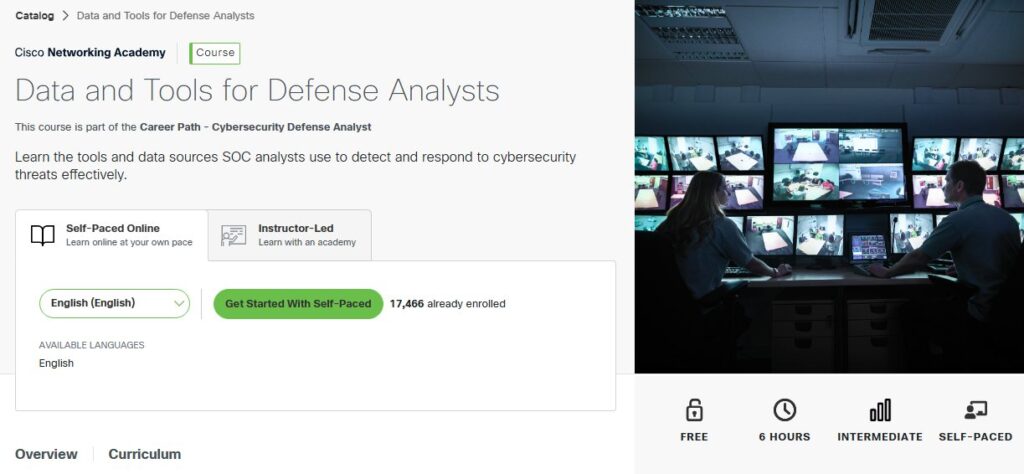
NetAcad describes it as using Splunk and threat intelligence sources to investigate attacks as a SOC analyst.
- You will learn: how analysts work with security data and tools. Threat intelligence, meaning evidence-based information about adversaries and their behavior, helps judge whether an alert deserves attention.
- Skills: analyzing security data and using intelligence during triage.
- Who should take it: learners who have covered Splunk basics.
- Enrol: Data and Tools for Defense Analysts
6. The Art of Investigation
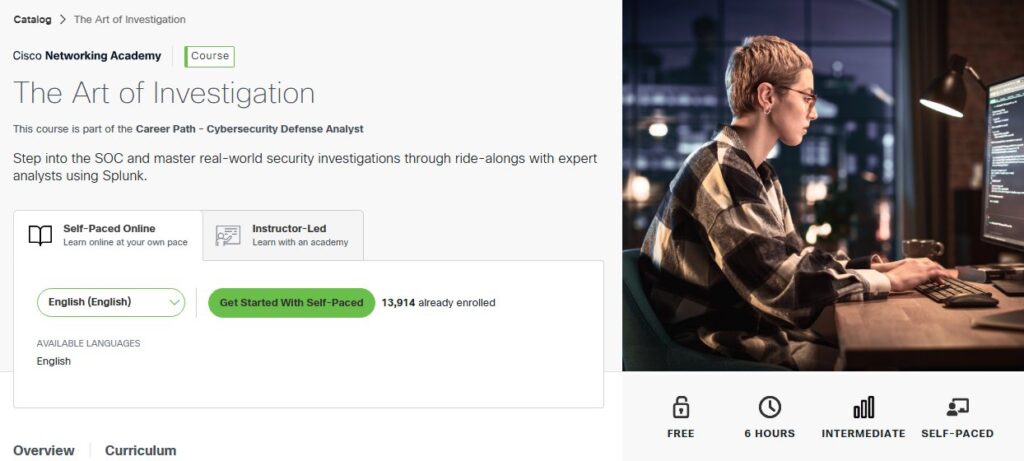
Moves from tools to method: turning data and alerts into a defensible account of what happened.
- You will learn: the investigation side of the analyst role. Review the module list on the course page, as content may be updated.
- Skills: structured, evidence-based incident investigation.
- Who should take it: learners comfortable with basic Splunk searching.
- Enrol: The Art of Investigation
7. SOC Essentials: Investigating with Splunk
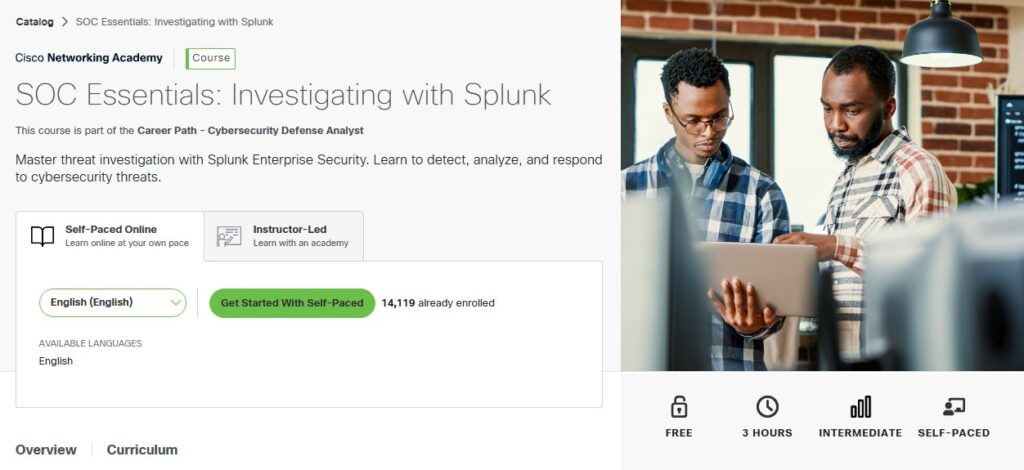
Set in the fictional “Wonderland SOC,” this intermediate course uses Splunk Enterprise Security to detect, analyze and respond to threats.
- You will learn: per Splunk’s description, how Enterprise Security supports analysts through asset and identity data, threat intelligence, notable events and investigation management, plus risk-based alerting and an introduction to Splunk SOAR automation.
- Skills: triage and investigation in a SIEM.
- Who should take it: learners who finished the earlier courses.
- Enrol: SOC Essentials: Investigating with Splunk
8. SOC Essentials: Introduction to Threat Hunting
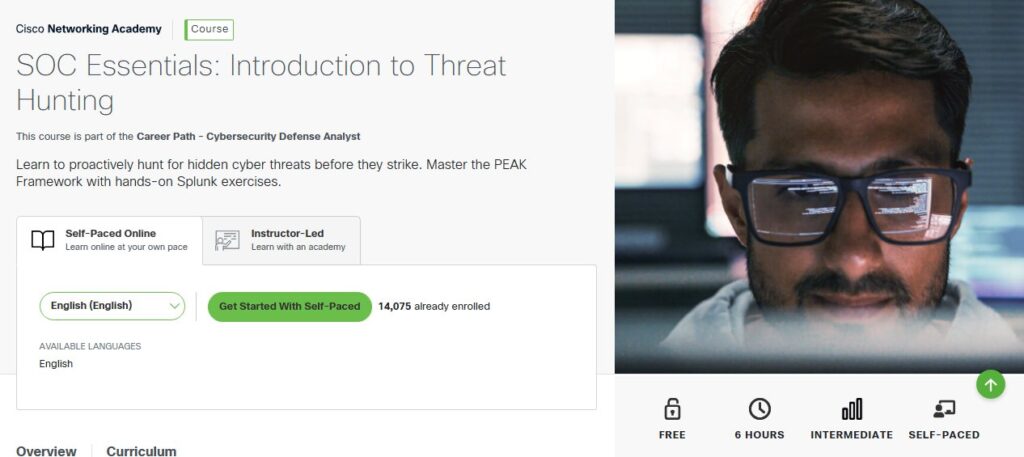
The final course. Threat hunting is the proactive, hypothesis-driven search for threats that automated detection missed.
- You will learn: the PEAK Threat Hunting Framework, hypothesis-driven, baseline and model-assisted hunts, and how to test theories against unusual behavior.
- Skills: planning and running basic hunts with Splunk.
- Who should take it: intermediate learners who completed the path so far.
- Enrol: SOC Essentials: Introduction to Threat Hunting
Recommended Learning Sequence
Follow the numbered order.
- Courses 1–3 build context,
- 4–5 teach the tools and data, and
- 6–8 apply them to investigation and hunting.
If networking is new to you, strengthen that first, since Splunk’s descriptions assume familiarity with the OSI model, networking concepts, and Windows and Linux.
Also learn,
- 6 Free AI Courses and Certifications to Build Practical Skills
- Free Cybersecurity Learning Path: 7-Week Beginner Roadmap
- Complete Nmap Guide: Network Scanning, Service Enumeration, NSE, Output Analysis, and Security Auditing
- Network Security Tools Explained: Nmap, Nessus, OpenVAS and Wireshark
- Cybersecurity Devices for Beginners: Five Small Devices With Big Potential
How the Path Supports a Beginner’s SOC Journey
The path gives you structured exposure to SOC vocabulary, Splunk searching and investigation workflows, and it ends at an intermediate level. It does not replace experience. Pair it with hands-on practice, keep written notes on each investigation you work through, and treat the finished badges as evidence of study, not of job readiness.
Frequently Asked Questions
Are these courses really free? NetAcad lists them as free, self-paced courses with a free account. Check each page for current terms.
Do I need Splunk experience first? No for course 4, which starts with the basics. Later courses assume you have learned Splunk searching.
Will completing them make me a SOC analyst? No. They build knowledge and practice, but hiring depends on skills, experience and each employer’s requirements.
Is there a certification attached? The Splunk Certified Cybersecurity Defense Analyst exam is separate, administered by Splunk, and you register and pay for it independently. Splunk recommends Power User-level Splunk Enterprise knowledge. The free courses are preparation, not the credential.
How long does the path take? Cisco cites about 30 hours across the eight courses. Your pace depends on your background.
Start With Course One
Create a free NetAcad account, open The Cybersecurity Landscape, and work through the path in order. Write up what you investigate along the way. That record will say more about your skills than a list of badges.
Discover more from Jahid Shah
Subscribe to get the latest posts sent to your email.