



Almost every organization now holds something worth stealing: customer records, login credentials, a website that earns money. That is why people who understand how attacks work, and how to stop them, are in steady demand. The obstacle for many learners is cost. Training can be expensive, and it is hard to tell which courses deserve your time before you have started one.
That is where free, structured learning helps. Cisco offers several free cybersecurity courses that move from basic awareness to offensive security. Here are five of them, what each one covers, and a sensible order to take them in.
What Is Cisco Networking Academy?
Cisco Networking Academy, often shortened to NetAcad, is Cisco’s education program for technology skills. Its self-paced online courses are free to join: you create an account, pick a course, and work through it at your own speed. Completing a course typically earns a digital badge you can share on a profile or CV.
One distinction is worth making early. A badge for finishing a free course is not the same as a professional certification exam. Cisco’s entry-level CCST Cybersecurity exam, for example, is a separate paid exam, which Cisco lists at US$125. The courses below are free to take; exams are a different step.
5 Free Cisco Cybersecurity Courses
1. Introduction to Cybersecurity
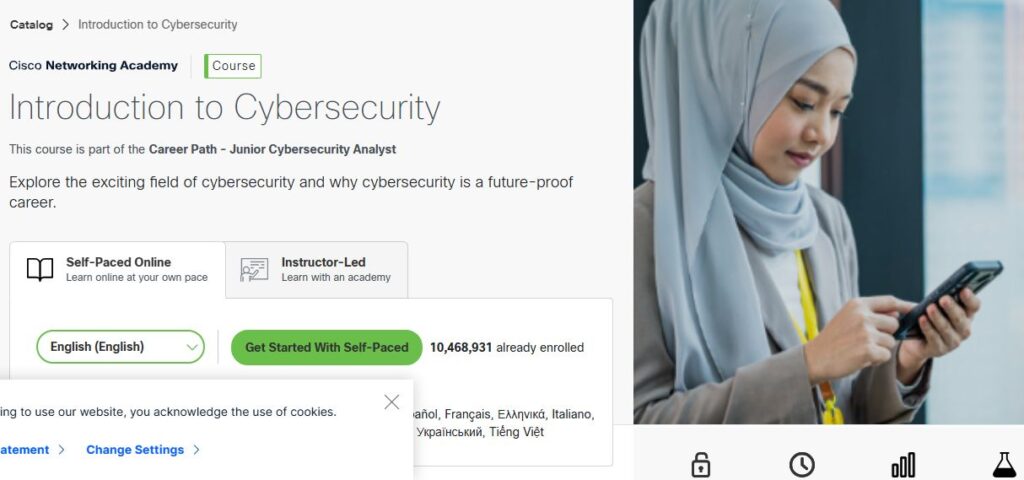
- What it is: A beginner-friendly starting point. Cisco says no experience is necessary.
- What you will learn: What cybersecurity is and why it affects you, the most common threats, attacks and vulnerabilities, how to protect your privacy and personal data, and what careers in the field look like.
- Skills you can develop: Threat awareness, safer online habits, and a basic vocabulary for talking about security.
- Who should take it: Complete beginners, career changers testing the waters, and anyone who wants to stay safer online without going deeper.
Enroll in Introduction to Cybersecurity
2. Endpoint Security

- What it is: A hands-on defensive course. Cisco’s listing describes it as free, beginner-level, self-paced, with 27 hours of content and 31 labs.
- What you will learn: Why different types of data create different protection challenges, how to document and recommend mitigation measures for common network threats, how to configure a simulated network, how to analyze malware files pulled from packet captures, and how to evaluate endpoint security.
- Skills you can develop: Antimalware protection, Windows security, Linux basics, host-based intrusion prevention, application security and securing wireless networks.
- Who should take it: Learners who finished the introduction and want practical labs rather than theory alone.
3. Network Defense
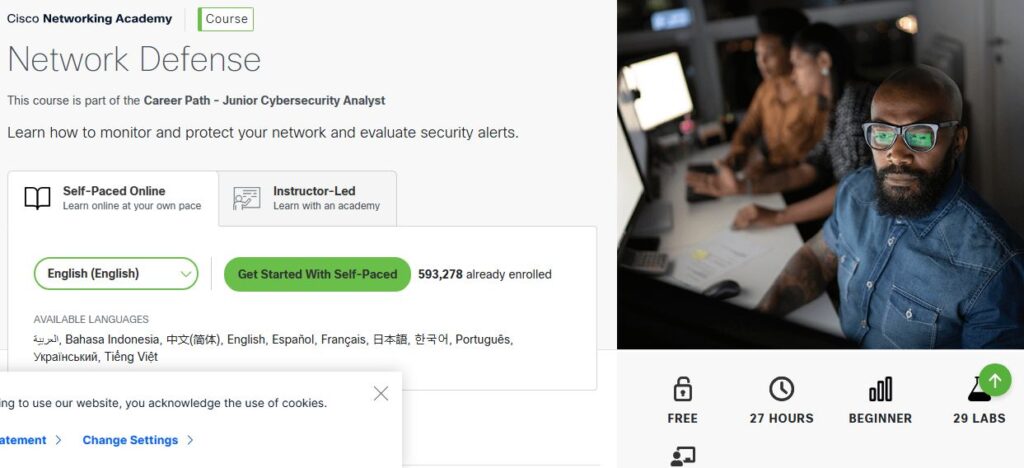
- What it is: An intermediate course focused on watching and protecting a network. Cisco describes it as teaching you to monitor and protect your network and evaluate security alerts.
- What you will learn: How to monitor network activity, assess the alerts security tools produce, and respond to attacks and exploits.
- Skills you can develop: Network monitoring and alert evaluation, the day-to-day habits behind defensive security work.
- Who should take it: People with some networking footing. If networking is new to you, Cisco’s free Networking Basics course is a gentler first step.
4. Cyber Threat Management
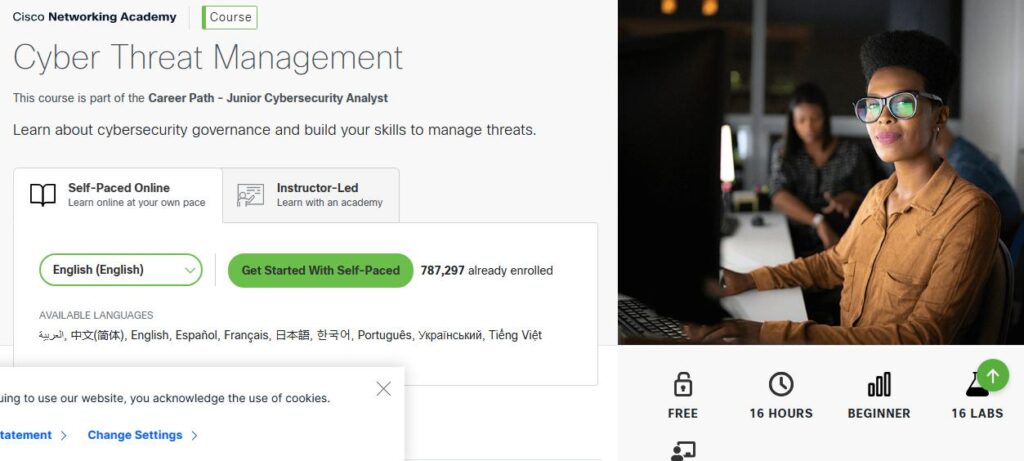
- What it is: A course on cybersecurity governance and managing threats, and the last course in Cisco’s Junior Cybersecurity Analyst path.
- What you will learn: Learning is organized into six modules: governance and compliance, network security testing, threat intelligence, endpoint vulnerability assessment, risk management and security controls, and digital forensics with incident analysis and response.
- Skills you can develop: Assessing a network for vulnerabilities, thinking in terms of risk, and responding to security incidents.
- Who should take it: Learners who have worked through the earlier defensive courses and want the policy and process side of security.
Enroll in Cyber Threat Management
5. Ethical Hacker
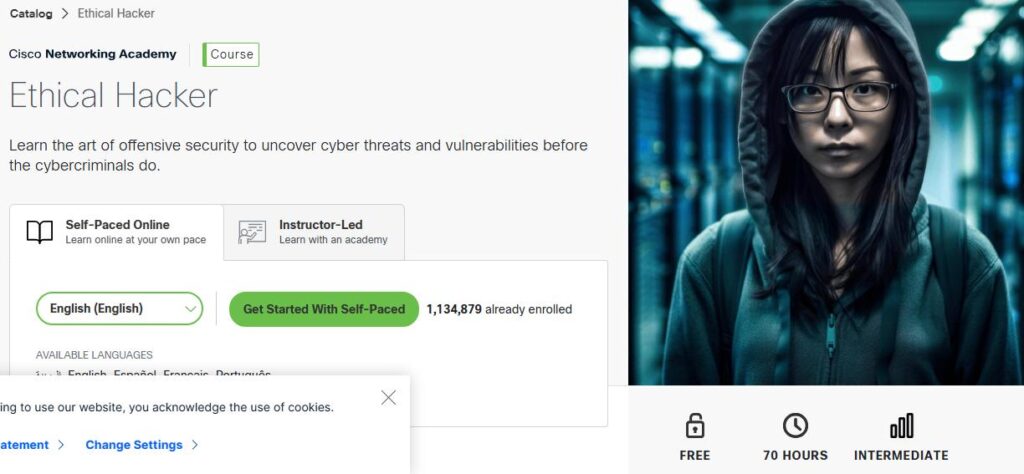
- What it is: Cisco’s free offensive security course, aimed at the skills behind ethical hacking and penetration testing.
- What you will learn: Scoping and carrying out assessments, then reporting findings and recommending fixes.
- Skills you can develop: Cisco lists vulnerability assessment and scanning, penetration testing, exploiting applications and networks, social engineering, IoT security, pentesting tools and reporting.
- Who should take it: Cisco lists the Junior Cybersecurity Analyst path, or equivalent entry-level knowledge, plus basic programming as prerequisites. This is not a first course.
Finishing it prepares you for the Cisco Certificate in Ethical Hacking, which requires passing the course’s final exam and then at least one Capture the Flag challenge in Cisco U. Check Cisco’s program page for current terms on that second step.
Recommended Learning Order for Beginners
- Introduction to Cybersecurity
- Networking Basics (optional but useful, and part of Cisco’s path)
- Endpoint Security
- Network Defense
- Cyber Threat Management
- Ethical Hacker
Defensive skills first is deliberate. Knowing how systems are protected makes it much easier to understand how they are attacked.
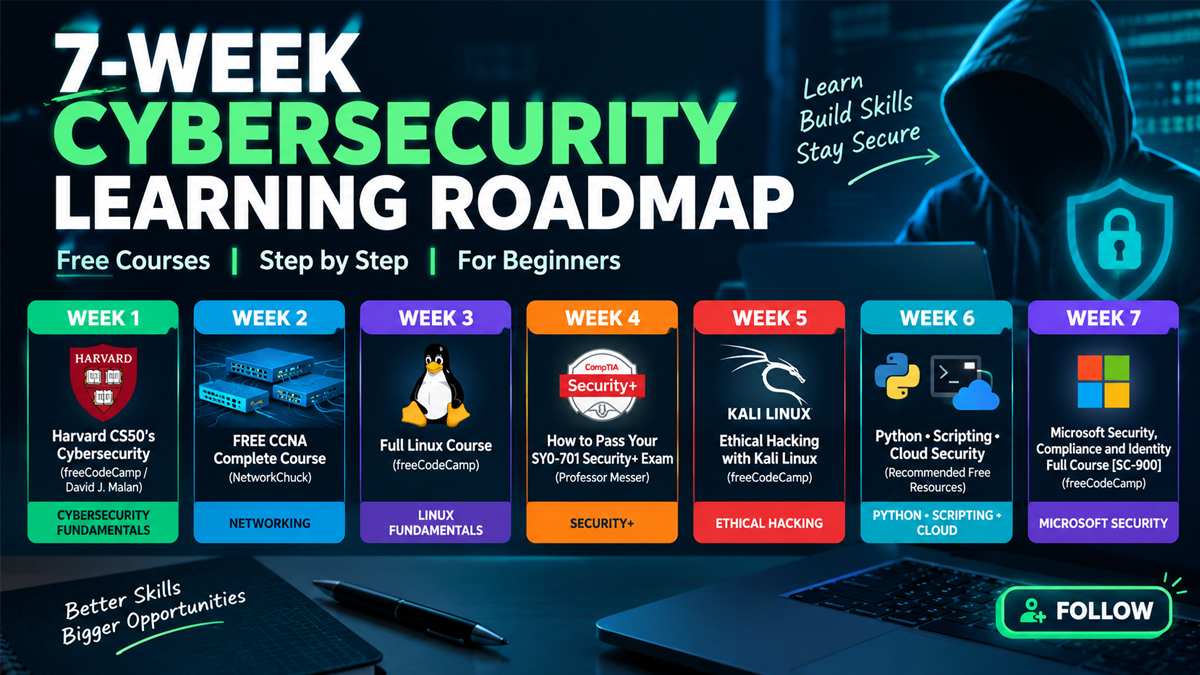
Also, learn our Free Cybersecurity Learning Path: 7-Week Beginner Roadmap.
Are These Courses Suitable for Aspiring Cybersecurity Professionals?
They make a solid foundation, not a finish line. Cisco positions the Junior Cybersecurity Analyst path as preparation for entry-level roles such as cybersecurity technician or analyst, but no course guarantees a job.
To stand out, pair the courses with your own practice: build a small home lab, get comfortable with Linux, and write up what you learn. Employers tend to value demonstrated curiosity as much as badges.
Frequently Asked Questions
1. Are these Cisco cybersecurity courses really free?
Cisco lists all five as free. Exams for professional certifications, such as CCST Cybersecurity, are separate and paid.
2. Do I get a certificate?
Free courses typically award a digital badge or completion credential. That is different from a professional certification.
3. Do I need experience?
Not for Introduction to Cybersecurity. Ethical Hacker expects prior entry-level knowledge and basic programming.
4. Can I learn ethical hacking from scratch?
Start with the earlier courses first. Only test systems you own or have written permission to test.
5. Which course should I take first?
Introduction to Cybersecurity.
Also, read our article Complete Nmap Guide: Network Scanning, Service Enumeration, NSE, Output Analysis, and Security Auditing.
Start Learning Today
Pick the first course, create a free account, and commit to a small weekly routine. Consistent practice over a few months beats a weekend sprint, and every lab you finish builds the habits that real security work depends on.
Discover more from Jahid Shah
Subscribe to get the latest posts sent to your email.